
Learn the Most Common Aboriginal Art Symbols
Indigenous Australian art is one of the world’s oldest continuous art traditions, a powerful form of storytelling that carries deep connections to land, culture, and history. The exact significance of these symbols varies from region to region, but all display a profound respect for the stories they tell. Curious about what they mean? Discover the most commonly used Aboriginal art symbols below, plus real examples from contemporary artists across Australia.

1. Person
Think about the shape you create when you sit cross-legged on the ground. This mark, a U shape, has come to represent a human in Aboriginal art. The utensils and tools placed beside it can determine whether the subject is male or female.

Example Artwork: Growing Together by Jacob Sarra.
A father’s journey with his daughters, mapped through vibrant pathways and sacred connections. The artwork tells a story of guidance, protection, and mutual growth. Rooted in tradition, flourishing in trust, and branching out into the future together.
2. Hunter
Deviating from the U shape emerges a symbol depicting a hunter: the body accompanied by a line, most commonly representing a spear or similar weapon.
Example Artwork: Through Country by Ernest Garrett.
Ernest’s artwork shows the traditional role of men on the quest to hunt kangaroo. You can see the tracks left by the animal as it moves through country.
3. The Rockhole
Rockholes are another example of a geographical place becoming sacred within Aboriginal storytelling. They often provide a water source but are also a prime spot for spiritual and cultural ceremonies, deeply tied to local Dreaming stories.
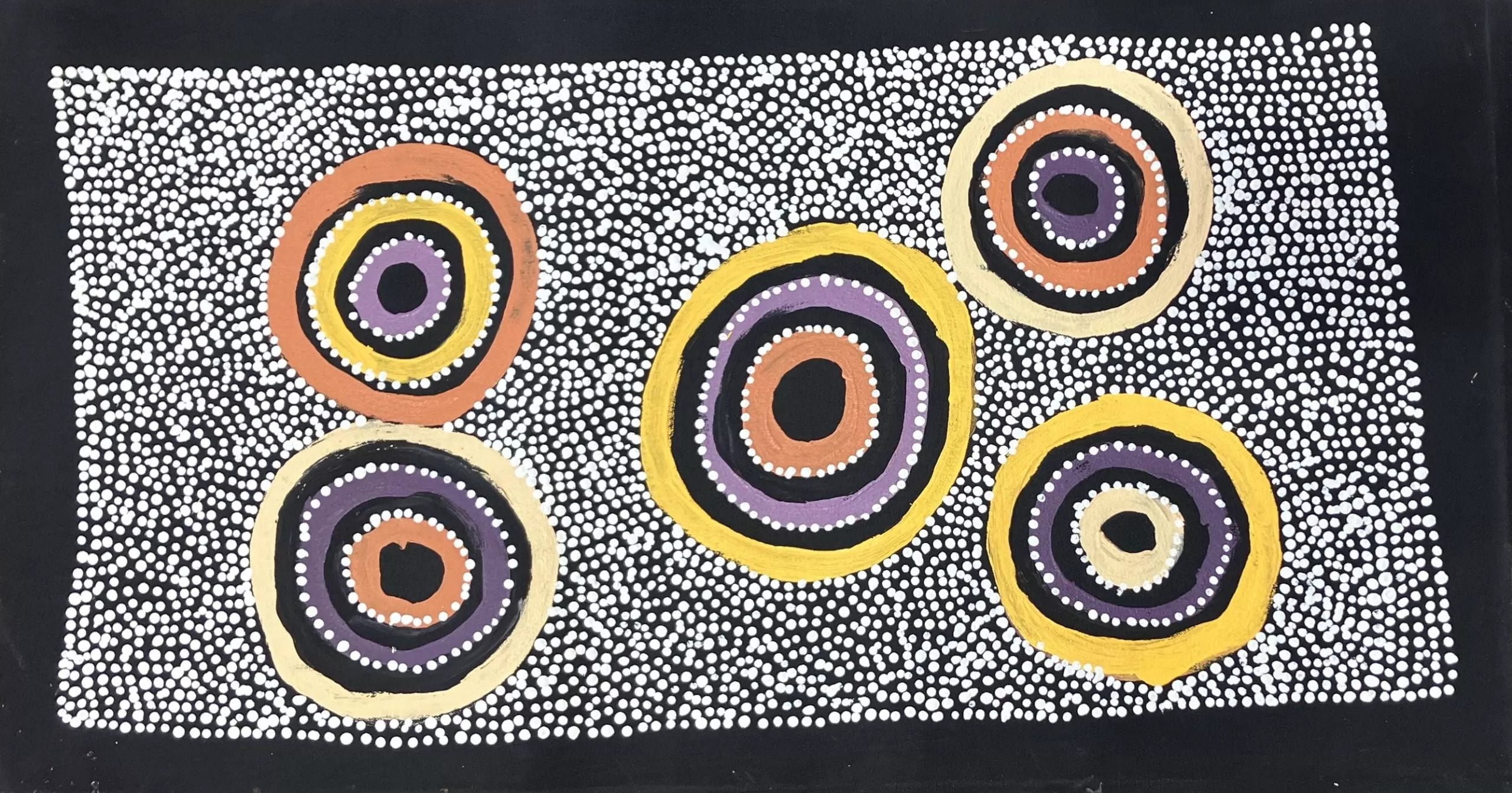
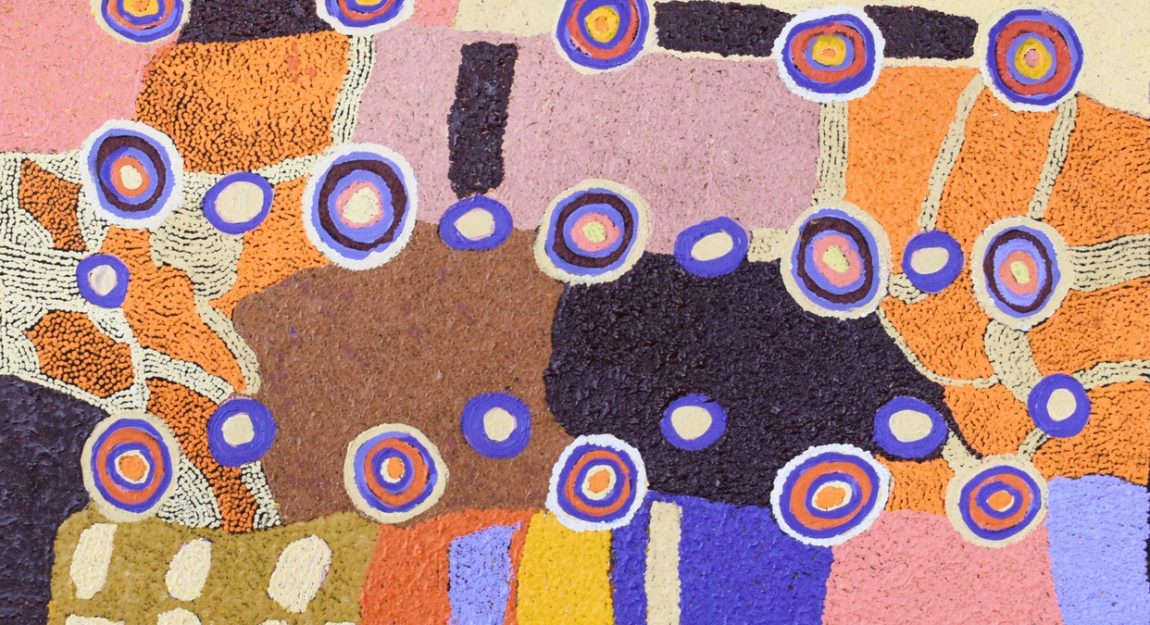
Example Artwork: Kaltukatjara Rockholes by Rosalind Yibardi.
Rosalind depicts the many rockholes in the country surrounding Kaltukatjara (Docker River) and Puta Puta, near her birthplace. In her own words: “Water is very important. When the rain comes, it fills up the rockholes. The people know where to go to find the water.”
4. Emu Tracks
The three-pronged footprint of the emu is one of the most recognisable animal tracks in Aboriginal art. Emus hold a significant place in Dreaming stories, representing the land’s wildlife and the deep relationship between people and country.
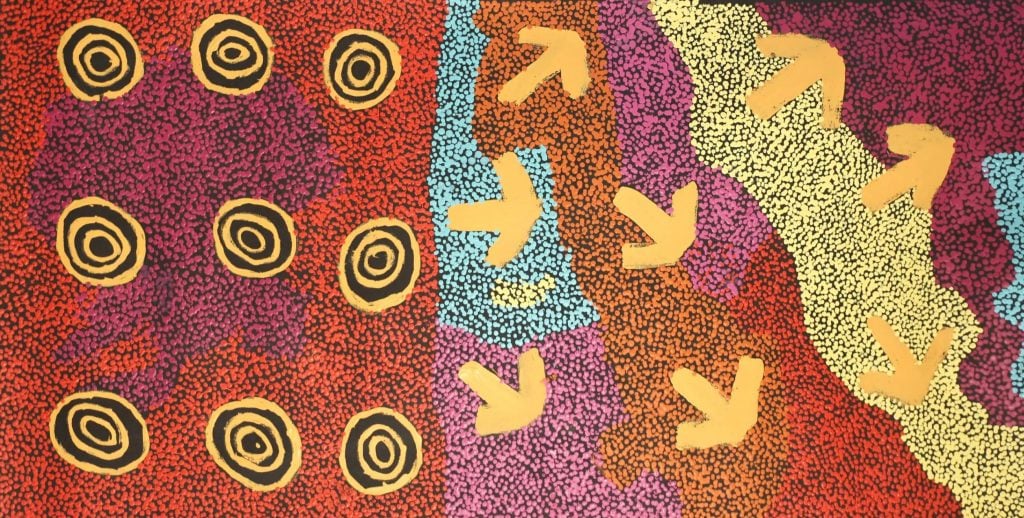
Example Artwork: Yankirri Jukurrpa (Emu Dreaming) by Margaret Nangala Gallagher.
This Jukurrpa story comes from Margaret’s father’s side and belongs to the Jangala/Jampijinpa men and Nangala/Nampijinpa women. The emu tracks woven through the work mark the journeys and sacred sites that define this country.
5. Meeting Place
The meeting place symbol represents where people gather for ceremony, trade, storytelling, or community. It is one of the most socially significant symbols in Aboriginal art, reflecting the importance of coming together on country.
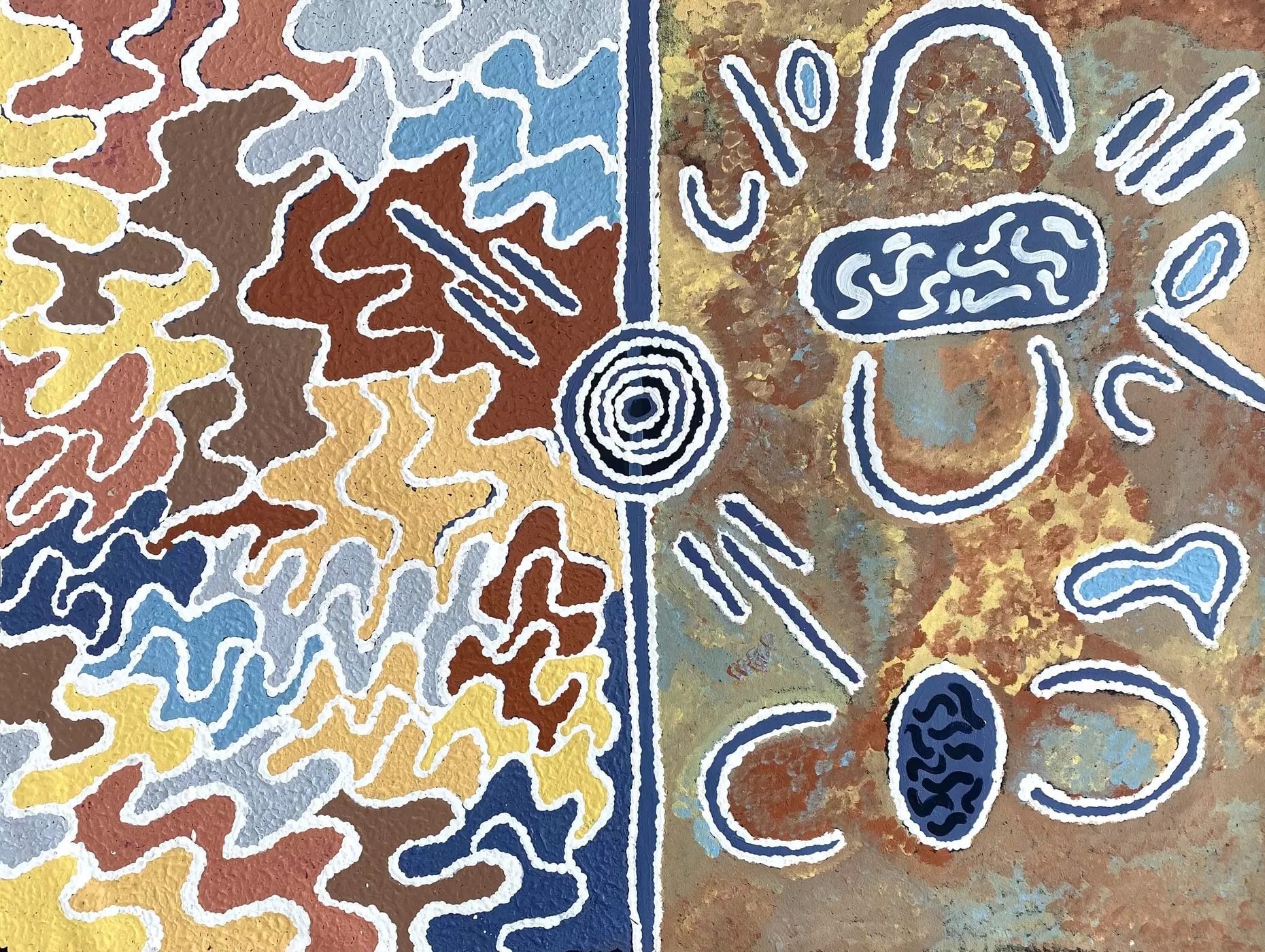
Example Artwork: Kungka Kutjara by Julieanne Bourke.
One of the most significant Tjukurpa stories of the Western Desert region. It tells the story of two sisters travelling through the desert. As they travelled, their actions created landmarks such as rock holes and mountain ranges, forging a record of their travels across the land. The story involves sensitive information that only women are allowed to know, so the fine details cannot be shared.
6. Running Water
It’s not uncommon to see tracks of running water stemming from waterholes. Since so much of Australia’s outback is dry and arid, running water is a treasure in remote dessert communities and a valuable part of Indigenous storytelling.
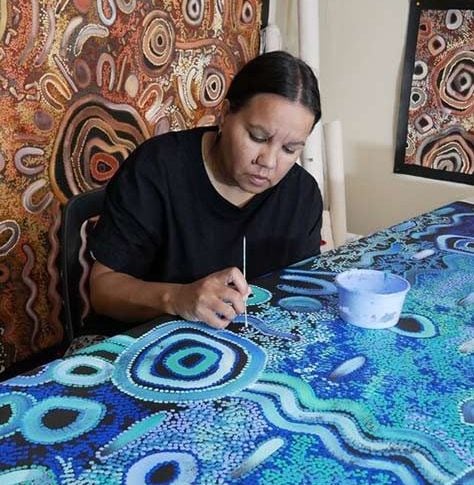
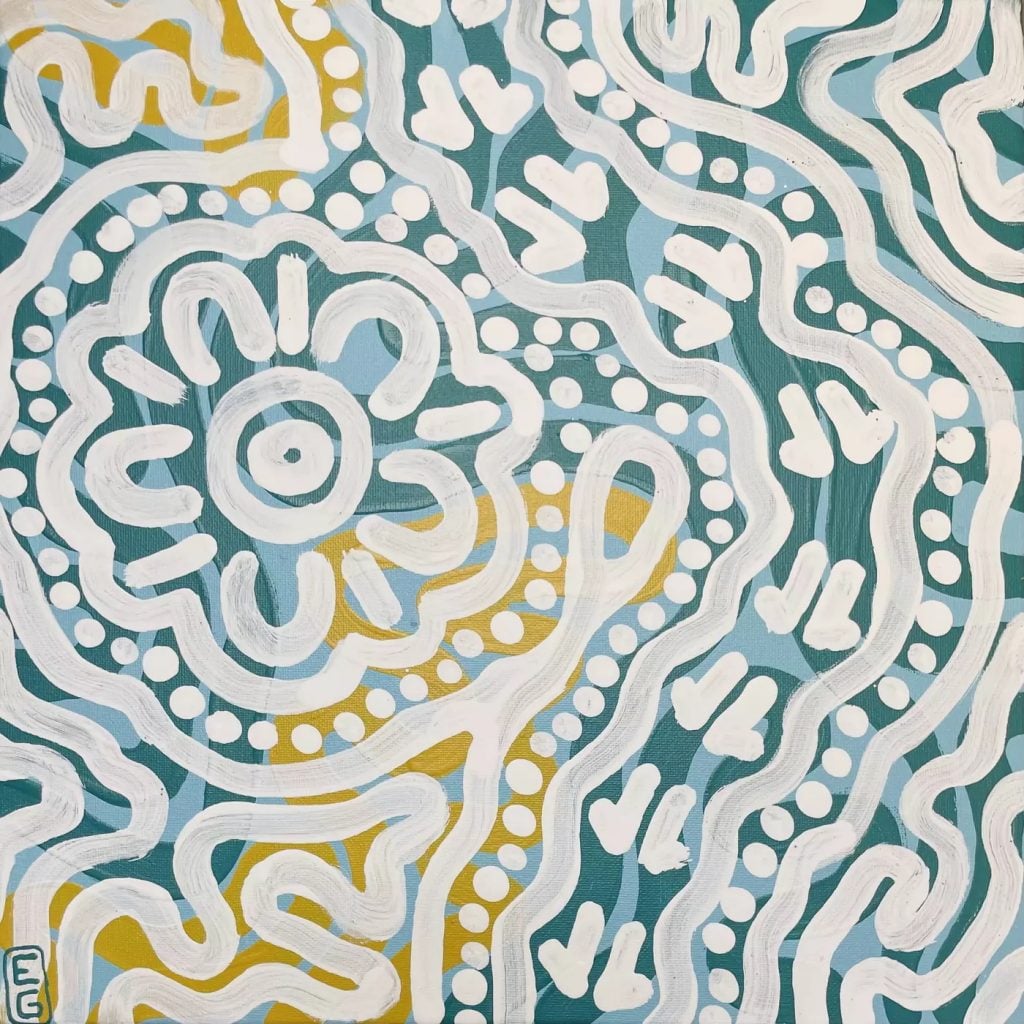
Example: Kelly Taylor of the Yankunytjatjara and Kokatha peoples.
Kelly often paints the symbol of flowing water to tell her stories about connection, journey, family, healing, and belonging. Themes that run as deep as the waterways themselves.
7. The Goanna
These ancient reptiles are frequent subjects in Aboriginal art since they are significant in Australia’s Indigenous communities. As a traditional source of bush food, goanna paintings come in traditional and contemporary works, and their weight in the artwork depends on the artist and the region they come from.
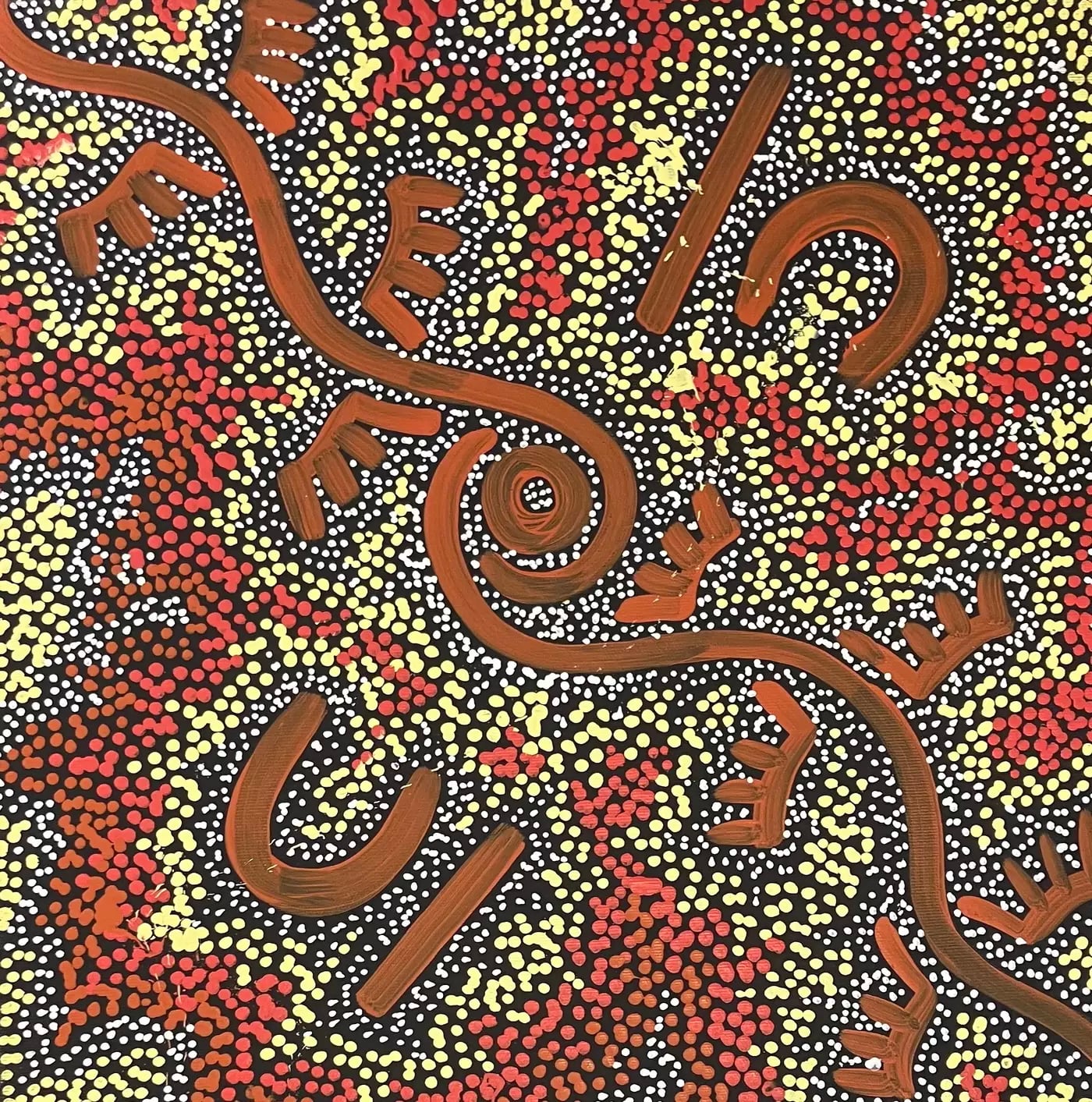
Example Artwork: Wardapi Jukurrpa (Goanna Dreaming) by Sebastian Japanangka Williams.
This Jukurrpa follows Wamaru, a Japangardi man who pursues a forbidden relationship with a Nungarrayi woman at Yarripilangu. Their encounter transforms the earth into white ochre. In a moment of transformation, he turns himself and all the women around them into goannas. White ochre found on that hill is still used today for love magic and ceremonial decoration, and a cave nearby bears the shape of a goanna entering the rock.
8. Bush Tucker
Food is at the heart of every culture, and Aboriginal stories are no exception! Bush onions, potatoes, tomatoes, bananas, honey ants–all bush tucker waiting to be gathered and grazed on! This food is native to Australia and is part of the culinary delights of Aboriginal Australian people. It is commonly represented by symbols of flora and fauna, usually with branches and berries

Canberra Artist Kayannie Denigan
9. The Snake
From the symbol of strength to the serpent of creation, the snake is a central character in many Aboriginal art stories. Throughout Australia’s indigenous communities, it is respected as a strong force within the animal kingdom.
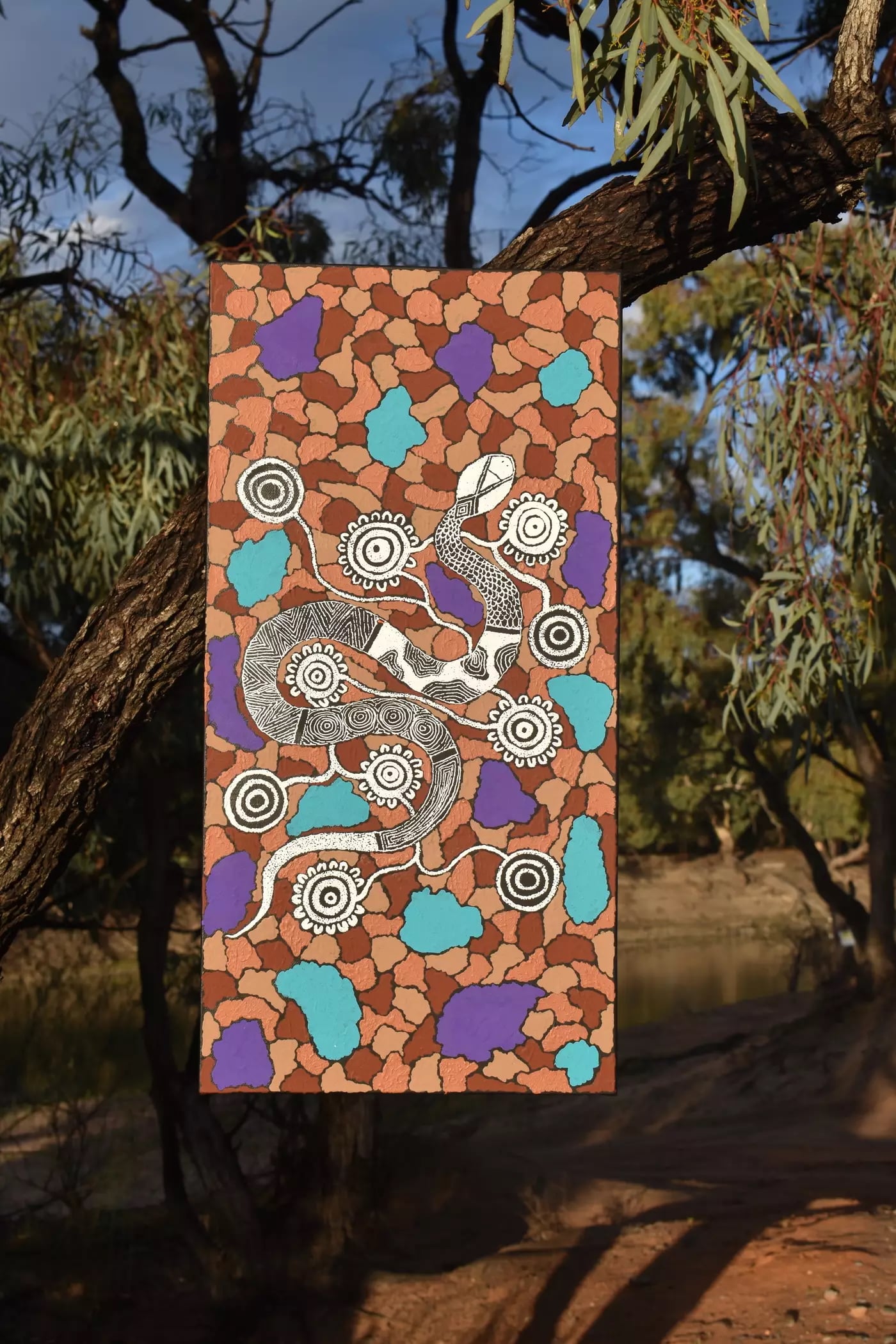
Example Artwork: Ngatyi’s (Rainbow serpent) Waterhole by Taya Biggs
Taya depicts the rainbow Serpent creating the barka (river), lakes and waterholes.
10. The Mimih Spirit
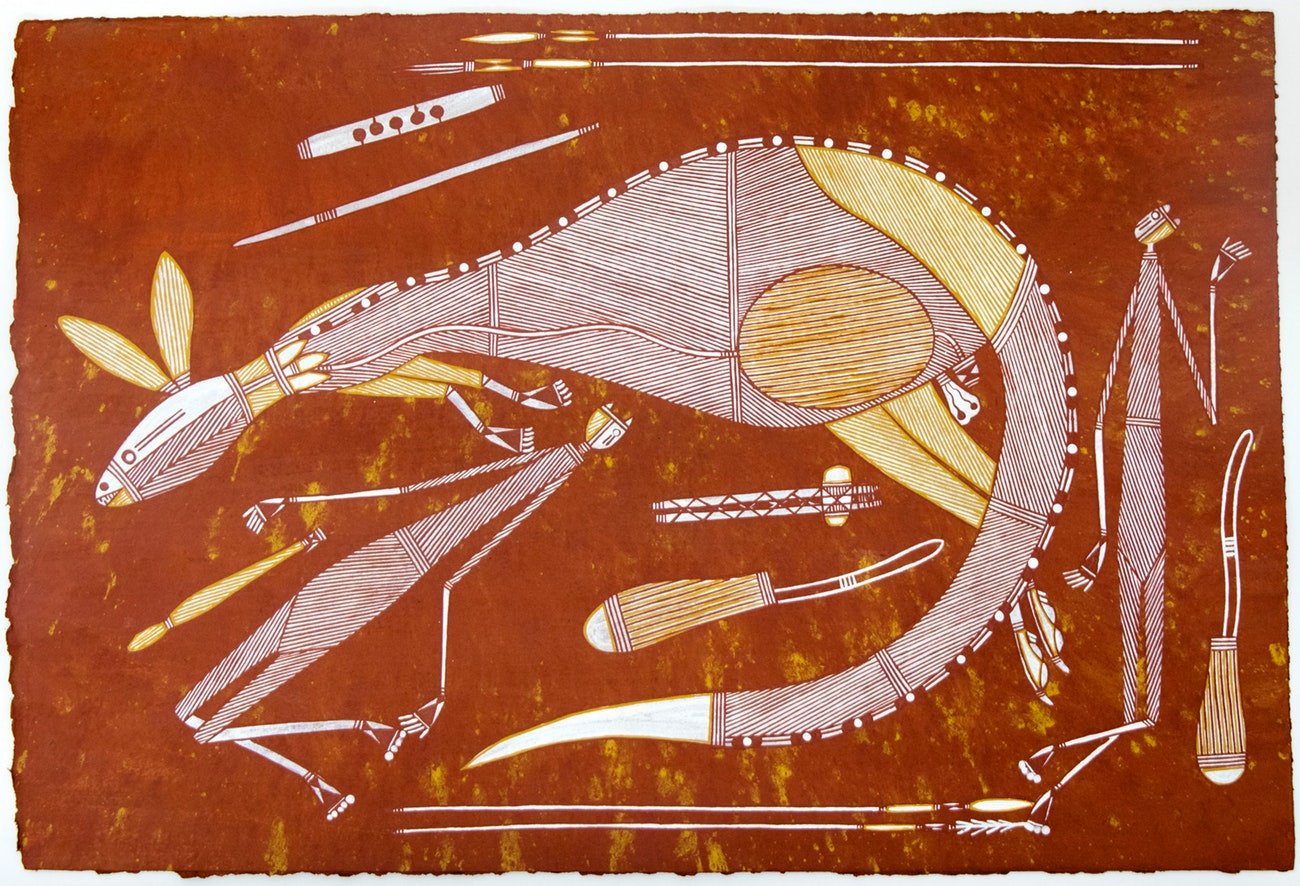
Legend states that mimihs were the original spirit beings, who taught Aboriginal people many skills to survive in the bush, along with ceremonies, dance, and song. According to the Kunwinjku people of western Arnhem Land, the mimih spirits are seldom seen by human eyes but continue to reside in rocks, trees, and caves.
Shop Ethical Indigenous Art
Bluethumb is a proud Indigenous Art Code member. Every purchase directly supports independent Aboriginal artists and remote Art Centres across Australia





I am looking for information about the meaning of symbols carved on a coolamon I purchased in Sydney in 1985 (I believe in a state art shop). I have no information about the patterns, and I wonder. I am an art admirer, not a dealer. There is a mark on the underside of the coolamon that reads MK-16 TPAEG.
I bought an aboriginal painting from Tandanya last year. When I asked a staff member and the director. Philip sanders what was the dreamlike symbols or story behind the painting, they had no idea and seemed surprised that a non indigenous person would ask such a question. So I asked them to find out. Empty promises and several follow ups were fruitless. I was annoyed that none of the art they represented had any background artists information. Indigenous art is unique and beautiful and they don’t bother. I think that Tandanya is disingenuous and will never buy or recommend them again, and do a disservice to the artists they represent.